


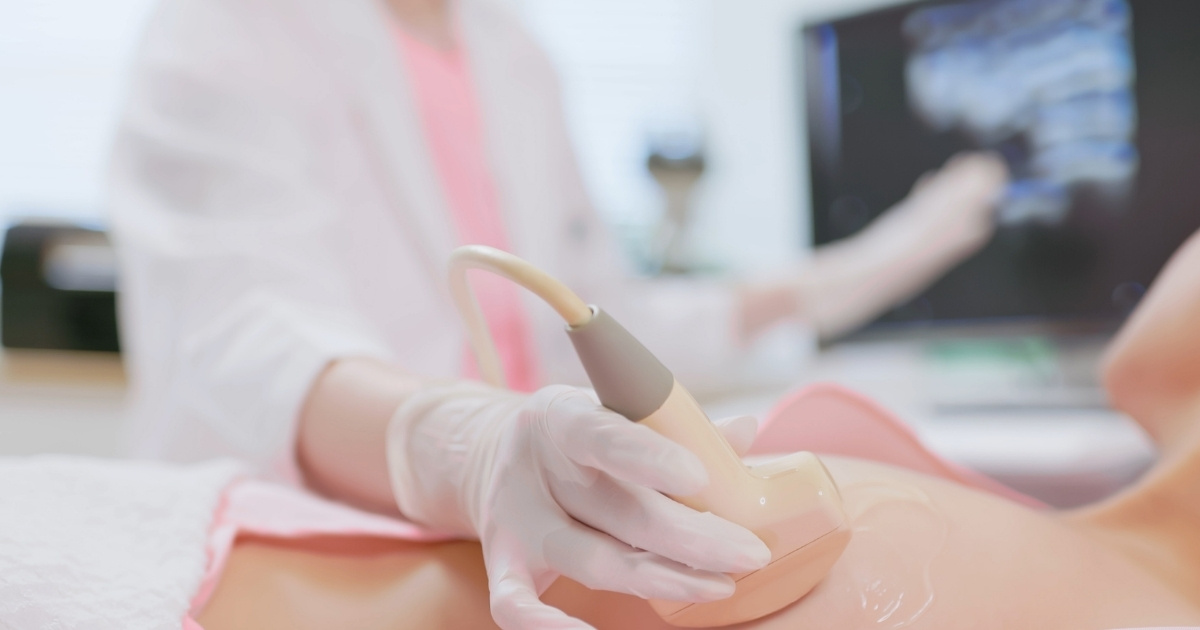
Breast Ultrasound Malta
A key part of breast imaging for younger women
Concerned about a breast lump, pain, or change? LifeScan's dedicated breast ultrasound service is Malta's fast, radiation-free option. A consultant radiologist performs every scan and reports results on the same day.
Pick your own time slot online, 24/7.
Why Breast Ultrasound Is the Right Choice for Younger Women
No radiation
Uses sound waves, not X-rays. Safe at any age, in pregnancy and while breastfeeding, and can be repeated as often as needed.
Clear images of dense breasts
Younger women naturally have denser breasts, which makes mammograms harder to read. Ultrasound sees through dense tissue clearly, so it is the preferred scan under 40.
Painless and quick
About 15–20 minutes, with no compression and no special preparation.
Who Should Have a Breast Ultrasound?
You don't need a symptom to book — peace of mind is reason enough. Common reasons by age:
Teens & early 20s
- New breast lump or thickening
- Breast pain not related to periods
- Nipple discharge or inversion
- Asymmetry or skin changes
Mid-to-late 20s
- Fibroadenoma follow-up
- Strong family history of breast cancer
- Breast changes during or after pregnancy
- First-time breast health baseline
30s
- Annual breast health check
- Hormonal or cyclical breast changes
- Breast implant assessment
- Strong family history of breast cancer
See live availability and choose your appointment time online, day or night.
What Can a Breast Ultrasound Detect?
The full range of findings common in younger women — not just lumps.
Breast cysts
The most common breast finding at any age. Ultrasound confirms a simple cyst with near certainty, and simple cysts are always benign.
Fibroadenomas
The most common solid lump under 30. Typical-looking fibroadenomas in young women may not need a biopsy.
Fibrocystic changes
Hormone-related lumpiness and tenderness. Ultrasound rules out a separate lump underneath.
Nipple discharge
Checks the ducts behind the nipple, and is often the only scan younger women need.
Pregnancy & breastfeeding concerns
Abscesses, milk-filled cysts and inflammation. Ultrasound can also guide drainage if needed.
Breast implant integrity
Checks for rupture, folds or fluid around the implant, as part of routine implant check-ups.
Suspicious solid masses
Characterises uncertain lumps and can guide a core biopsy, avoiding surgery in most cases.
Book Your Breast Ultrasound
Select an appointment time that works for you. If you need an urgent appointment and no slots are available today, please call 2033 4444 to check whether any emergency appointments can be accommodated.
Claiming on health insurance? If you're booking without a referral, your insurer may require one from a doctor outside LifeScan. Please check with your insurer before your appointment.
Why Choose LifeScan for Your Breast Ultrasound in Malta?
Consultant radiologist — every time
Every scan is reported by an experienced Malta-based consultant radiologist (doctor).
Dedicated imaging centre
Breast imaging is a core part of what we do every day.
No referral required
Book directly. GP, gynaecologist and surgeon referrals are also welcome, and your insurer may ask for one if you plan to claim.
Fast appointments
New breast symptoms are prioritised. We aim to see you within 24–48 hours.
Same-day written report
Ready on the day, so any next steps aren't delayed.
A clinic for women at every stage
Private and reassuring, whether you're 16 or 39, living in Malta or visiting.
Frequently Asked Questions
Breast ultrasound Malta — your questions answered.
At what age should I have my first breast ultrasound in Malta?
There is no strict minimum age. Any woman or teenager who notices a new lump, breast pain, nipple discharge, or any change in breast appearance should be assessed. Ultrasound is the preferred first-line imaging for women under 40 precisely because it works so well on denser breast tissue without any radiation exposure.
Is breast ultrasound safe during pregnancy or while breastfeeding?
Yes — completely. Ultrasound uses sound waves, not radiation, and is the imaging modality of choice for breast assessment during pregnancy and throughout breastfeeding. It is the same technology used to scan babies in the womb.
What is the difference between a breast ultrasound and a mammogram?
A mammogram uses low-dose X-rays and is the gold-standard screening tool for women over 40. Breast ultrasound uses high-frequency sound waves and is preferred for younger women with naturally denser breast tissue, where mammograms are less reliable. Ultrasound is also the better tool for characterising a specific lump — distinguishing a simple cyst (always benign) from a solid mass that may need further investigation.
Can a breast ultrasound detect cancer?
Ultrasound is highly sensitive for detecting masses in dense breast tissue and can strongly suggest whether a lump is benign or suspicious. However, it is not a standalone cancer screening tool. When findings are suspicious, the radiologist will recommend next steps — which may include targeted mammography, a follow-up scan, or an image-guided biopsy.
I found a lump — how quickly can I be seen at LifeScan Malta?
We understand that finding a lump is frightening. We aim to offer appointments within 24–48 hours for symptomatic referrals. You can book online any time via our website, or call us directly for urgent appointments.
What conditions can breast ultrasound identify in young women?
Breast ultrasound in young women can identify simple cysts, complex cysts, fibroadenomas (the most common benign solid lump in women under 30), fibrocystic changes, lymph nodes, abscesses (particularly relevant during breastfeeding), lipomas, and any suspicious solid mass. It is also used to assess nipple discharge and unexplained breast pain.
Do I need a GP referral for a breast ultrasound in Malta?
No. You can book directly with LifeScan without a referral. Many women come to us after noticing a change themselves, or following advice from a pharmacist, gynaecologist, or their GP. Your report will be sent to any doctor of your choice. However, if you plan to claim on health insurance, your insurer may require a referral letter from your GP or another doctor who is not the radiologist you are seeing, so please check with them first.
I have breast implants — can I have an ultrasound?
Yes. Ultrasound is completely safe with breast implants and does not damage or affect them in any way. As part of your breast ultrasound, the implants are also assessed for signs of rupture or other silent changes. Since ultrasound uses no radiation, many women choose to include yearly ultrasound check-ups as part of their ongoing breast health routine, especially when implants have been present for several years.
How long does a breast ultrasound take, and does it hurt?
The examination typically takes 15–20 minutes. It is entirely painless — the radiologist applies a small amount of warm gel to the skin and moves a handheld probe across the breast. There is no compression and no discomfort. You will receive a verbal summary before leaving, and your full written report will be emailed promptly.
Do I need to prepare anything before my breast ultrasound?
No special preparation is required. You can eat and drink normally beforehand. Wear a comfortable two-piece outfit so the breast area is easily accessible. Avoid applying lotions or creams to the chest area on the day of your scan, as these can interfere with the gel used during the examination.