


Pectus Clinic Malta
Specialist chest wall assessment and care led by surgeon Mr David Sladden.
Expert diagnosis, detailed chest wall investigations, custom bracing, and surgical treatment options for Pectus Excavatum & Carinatum.
The Pectus Service at LifeScan Clinic provides specialized, comprehensive care for congenital chest wall deformities. Under the direction of consultant chest wall surgeon Mr David Sladden, we offer advanced diagnostics and a spectrum of modern management paths tailored to the severity and shape of each patient's chest.
All consultations and diagnostic tests are designed to assess the physical defect, evaluate symmetry and chest wall flexibility, and identify any secondary impacts on cardiopulmonary function.
Pectus Excavatum
Sunken Chest Deformity
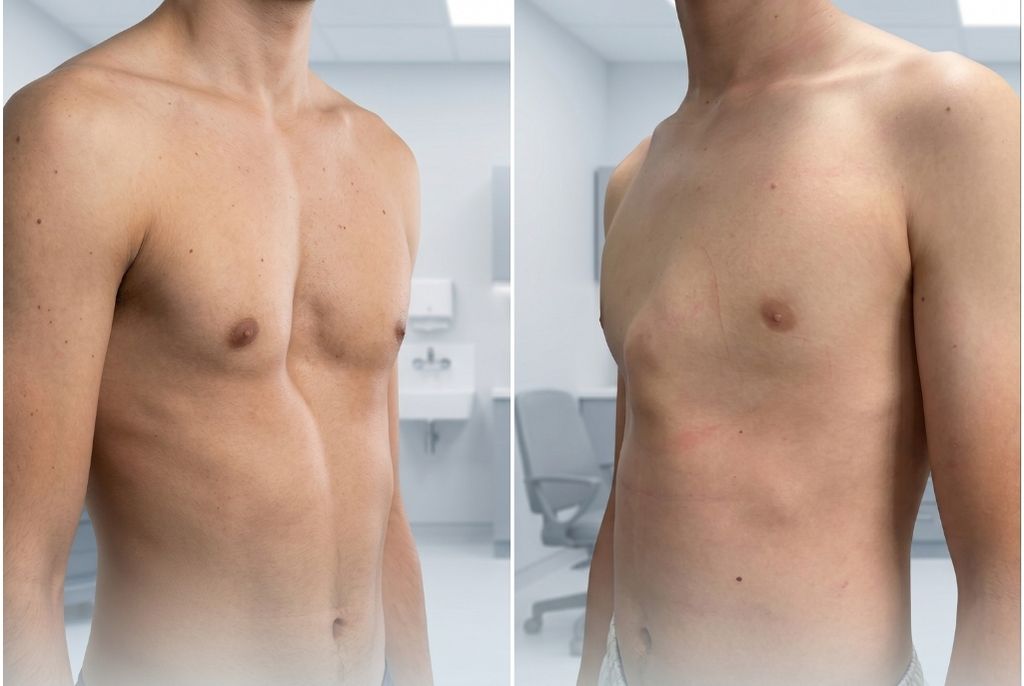
Pectus Excavatum is a congenital deformity where the breastbone (sternum) sinks inward. It can range from mild cosmetic concerns to severe structural depression that compresses the heart and lungs, causing shortness of breath or exercise intolerance.
Early specialist assessment is recommended to evaluate flexibility and potential impact on cardiac or respiratory function.
Pectus Carinatum
Pigeon Chest Deformity
Pectus Carinatum is a condition where the sternum and costal cartilages protrude outward. It often becomes more prominent during early teenage growth spurts, causing physical discomfort, clothing fit issues, and psychological distress.
When caught early while the chest wall remains flexible, it can often be highly successfully corrected using a custom-made external brace.
Diagnosis & Investigation
A thorough clinical diagnosis starts with a detailed physical examination. Our surgeon Mr David Sladden assesses:
- Chest Wall Symmetry: Evaluating structural asymmetry and the severity of protrusion or depression.
- Flexibility: Testing chest wall compliance, which determines suitability for non-surgical bracing.
- Cardiopulmonary Impacts: Asking target questions regarding shortness of breath, chest pain, or palpitations.
Based on the clinical exam, specialized diagnostic tests may be scheduled to formulate a precise care plan.
Specialized Diagnostic Tests
To fully understand the severity and physiological impact of the chest deformity, several investigations are available:
- Chest X-Ray / CT Scan: Crucial to visualize the bone structures, measure indices (like the Haller index), and assess internal space.
- Lung Spirometry: A breathing test used to measure lung capacity and identify any respiratory limitations.
- Echocardiography: An ultrasound of the heart to rule out or detect compression or displacement of cardiac chambers.
Management & Treatment Options
Tailored care pathways ranging from non-surgical custom braces to advanced surgical reconstruction.
Custom External Bracing
For flexible Pectus Carinatum, a custom-made compression brace is the gold-standard non-surgical treatment. Fitted during the growing years, it gradually and safely reshapes the chest wall over several months.
Pectus Up Operation
A modern, minimally invasive surgical alternative. It involves the temporary implantation of a custom bar outside the ribs to lift the breastbone, offering a faster recovery and lower risks than classic surgery.
Nuss & Ravitch Operations
For severe structural deformities, standard surgical options like the Nuss procedure (inserting a metal bar underneath the sternum) or the Ravitch operation (resecting abnormal cartilage) are discussed.
Mr David Sladden
Consultant Heart & Lung Surgeon / Chest Wall Specialist
Mr David Sladden is a leading consultant cardiothoracic surgeon in Malta. He specializes in advanced lung treatments, chest wall reconstructions, and is the director of the Pectus Clinic at LifeScan.
Mr Sladden is dedicated to offering the highest standards of diagnostic care and treatment. Most tests, brace fittings, and minor or minimally invasive procedures are fully available in Malta. In highly complex instances, Mr Sladden consults with leading international teams and coordinates specialist referrals abroad when necessary to secure optimal outcomes.
Book your Pectus Clinic Consultation Online
Select an available slot below to book your consultation directly with Mr David Sladden.
Claiming on health insurance? If you're booking without a referral, your insurer may require one from a doctor outside LifeScan. Please check with your insurer before your appointment.
Need assistance or prefer booking by phone? Call us on +356 2033 4444 or email info@lifescan.mt.
Frequently Asked Questions
Find answers to common questions about chest wall assessment and treatment.
What is Pectus Excavatum and Pectus Carinatum?
Pectus Excavatum (often called sunken chest) is a congenital condition where the breastbone is sunken into the chest, creating a hollow appearance. Pectus Carinatum (often called pigeon chest) is a condition where the breastbone and ribs protrude outward. Both conditions can vary in shape and severity.
How are Pectus chest wall conditions diagnosed?
Diagnosis involves a detailed physical examination to identify the specific chest wall defect, assess symmetry, and measure chest wall flexibility. Our specialist, Mr David Sladden, will also evaluate whether the condition has any impact on your cardiac or respiratory function through targeted questions and diagnostic tests.
What specialized tests are ordered during a Pectus investigation?
Depending on the severity and shape of the chest wall, specialized tests can be ordered. These include a chest X-Ray or CT scan to inspect bone structure and severity index, lung spirometry to check respiratory function, and an echocardiography (Echo) to evaluate heart function.
What treatment options are available for Pectus deformities?
Management options range from conservative, non-invasive custom-made braces (particularly effective for growing children and teenagers with Pectus Carinatum) to surgical treatments. Surgical options include the minimally invasive 'Pectus Up' operation (implanting a bar outside the ribs) or standard corrective surgeries like the Nuss or Ravitch procedures.
Who is Mr David Sladden?
Mr David Sladden is our consultant chest wall surgeon who specializes in Pectus Excavatum & Carinatum. He conducts comprehensive evaluations at LifeScan Malta and manages patient care from initial diagnosis to brace fitting or surgical interventions.
Do I need a doctor's referral to visit the Pectus Clinic?
No referral is strictly required to book a consultation at the Pectus Clinic. Patients, parents, or guardians can request an appointment directly. If you have been referred by a GP, paediatrician, or other specialist, please bring your referral letter and any previous scan results to your appointment. However, if you plan to claim on health insurance, your insurer may require a referral letter from your GP or another doctor who is not the specialist you are seeing, so please check with them first.